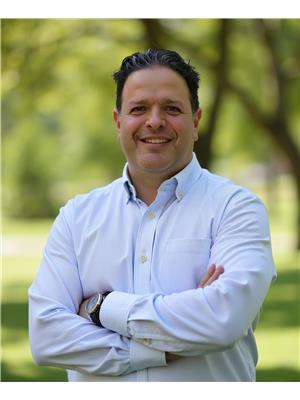
Ramon Gutierrez Join eXp → Business Model

A cloud-based platform built around four kinds of value

A clean walk-through of how the eXp model works — active income, passive-income potential, ownership, and scale — and the two ways to get started. Nothing here needs a decision today.

The Company, Briefly

Context for everything that follows

2009
Founded by Glenn Sanford
2014
Went public
87,338+
Agents worldwide, mid-2026
20+
Countries operating

The short version: no brick-and-mortar offices, no franchise layer. The brokerage runs cloud-based, and the money that would have gone to buildings and middle management goes back to the agents instead. That single design choice is what makes the rest of this page possible.

What Makes It Different

Four things the model is built around

A cloud-based real estate platform designed to combine active income, ownership, and scalable long-term opportunity.

One

Cloud-based

A virtual operating model, with technology replacing much of the traditional office infrastructure.

Two

Passive-income potential

Revenue-share opportunities can add an income stream beyond an agent's own personal production.

Three

Ownership

Stock and equity programs align agents with the growth and success of the company itself.

Four

Global scale

A platform that can support collaboration, attraction, and business expansion across markets.

Core ideaTraditional brokerage income is mainly tied to transactions. The eXp model adds multiple potential value channels around an agent's real estate business.
The Cost Curve

Why a cloud brokerage can share more back as it grows

Agents / scale → Cost per agent Traditional brokerage Cloud model Rent · staff · franchise fees rise with every desk added Shared infrastructure spreads the cost thinner as agents join
More agents makes a traditional office more expensive to run. It makes a cloud brokerage cheaper per agent — and that saving is what funds the income streams below.
Head to Head

Traditional brokerage vs. the eXp platform model

A structural comparison — conceptual, not a financial projection.

Traditional brokerage

Primary engine: personal sales production
  • Agent closes transactions →
  • Brokerage receives fees / split →
  • Agent earns commission
  • Income is mostly linked to time, listings, and transactions.

eXp platform model

Connected value channels around the agent's business
  • Commission — active production
  • Revenue share — network contribution
  • Equity / stock — ownership potential
  • Global platform — scale and collaboration

The agent can build a business with both transactional and enterprise-style value.

Four Potential Value Channels

A clearer view of the four-part structure

1

Commission income

Income from serving buyers and sellers. This remains the active foundation of the business.

Immediate / active
2

Revenue share

Potential income connected to agents introduced to the platform and their qualifying production.

Recurring potential
3

Stock & equity

Ownership opportunities that may be earned or purchased through company programs.

Long-term value
4

Leadership & scale

Mentoring, attraction, and team growth can expand reach beyond individual production.

Scalable impact

Exact program terms should be confirmed with current official eXp materials.

How Revenue Share Is Structured

Why the shape of the network matters more than the size

YOU TIER 1 TIER 2 TIER 3 You Agents you introduce directly — 1× the share Agents they introduce 2×, 3× — the passive part Depth beats width here.
Revenue share pays deeper than the people you personally sponsor. Percentages step down by tier and unlock as the network grows — ask Ramon for the current rate card when it's relevant to you.

A team is not a network. On a team, you manage people, split commissions with them, and carry the responsibility. Revenue share is a structure, not a management job — no supervising, no splits out of your pocket.

Where You'd Start

Two doors in — pick either, or both

PATH A

Get licensed

Full commissionon the deals you close, plus access to all four value channels

Two steps: complete a licensing course through a recognized real estate program, then pass the provincial exam. Once licensed, you hang your licence with the brokerage and everything above is open to you.

PATH B

Refer

Referral feeon business you send

Part of the referral collaboration network Ramon has built — not just local, but global. You introduce buyers and sellers and earn a referral fee on closing. It can start right away, and it's a real way to test whether the work suits you.

These aren't mutually exclusive. Plenty of people start at B and move to A once they've seen a few deals go through.

Next Steps

What happens if you want to talk further

01

Tell Ramon which door interests you

Licensed, referral, or still deciding. No wrong answer, and no rush.

02

If it's licensing — he'll send the course details

Timeline, cost, and what the exam actually asks. You'll know exactly what you're signing up for before you enrol.

03

If it's referrals — one short call

Fifteen minutes to cover how referrals get documented and paid, and you can start immediately.

04

Either way, talk again in two weeks

Bring the questions that come up after you've sat with this. Those are usually the good ones.

The reason Ramon goes through the model in this much detail rather than pitching it is simple: this only works if it actually fits your life. Read it, poke holes in it, and tell him where it doesn't add up for you. Any question is fair game, including the ones about money.

Illustrative overview only — exact program terms, percentages, and eligibility should be confirmed with current official eXp materials.